
Mental health struggles can make even normal days feel difficult. You may find it harder to sleep, focus at work, spend time with family, or enjoy things you once loved. As these problems continue, you may start feeling that weekly therapy is no longer enough.
But needing more support does not always mean staying in a hospital. There are different types of mental health treatment, and two options people often confuse are partial hospitalization programs (PHP) and inpatient care. Understanding how they work can help you feel more comfortable about getting the right support.
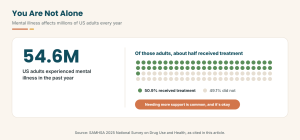
You are not alone in facing these challenges. SAMHSA’s 2025 survey found that approximately 54.6 million US adults experienced mental illness during the past year. Of these adults, approximately 50.9% received treatment. So, let’s understand how these two treatment options differ and which one may meet your needs.
What Is a Partial Hospitalization Program (PHP)?
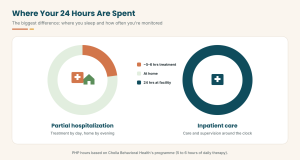
A partial hospitalization program (PHP) gives you several hours of mental health treatment during the day. You attend therapy, meet with healthcare professionals, and work on your recovery. Once your daily sessions finish, you return home instead of staying at a hospital overnight.
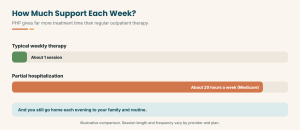
According to Medicare’s guidelines, PHP may include approximately 20 hours of treatment each week. This means you receive more support than regular outpatient therapy while still having time to spend with your family and follow your home routine.
At Cholla Behavioral Health, the Partial Hospitalization Program in Phoenix offers 5 to 6 hours of daily therapy. The programme supports people dealing with anxiety, depression, trauma, PTSD, bipolar disorder, and substance use.
During treatment, you work with psychiatrists, therapists, and nurses who understand your needs. They check your progress, listen to your concerns, and make changes to your care plan when needed… so you get support that matches your situation.
What Is Inpatient Behavioral Health Treatment?
Inpatient behavioral health treatment means staying at a hospital or residential treatment facility while receiving mental health care. You do not go home after your therapy sessions because healthcare professionals provide support and supervision 24 hours a day.
This type of treatment helps people who need more support than a daytime programme can offer. It gives you a safe place to focus on your health while trained professionals monitor your condition. Four main features make inpatient care different:
- Continuous supervision: Healthcare professionals monitor your health and safety 24 hours a day.
- Structured schedule: Your day follows a planned routine that includes therapy, meals, medication, and rest.
- Professional access: Psychiatrists, nurses, and therapists are available throughout your stay.
- Higher level of care: This option helps people facing serious mental health problems or situations that need constant attention.
Why Do PHP and Inpatient Care Serve Different Treatment Needs?
PHP and inpatient care both help people manage mental health problems, but they provide different levels of support. The main difference is where you stay and how often healthcare professionals monitor you. PHP lets you return home each evening, while inpatient care provides supervision around the clock.
But how do clinicians know which option is right for you? They look at your symptoms, safety, medical needs, and ability to manage daily activities. They also consider whether you have someone at home who can support you between treatment sessions.
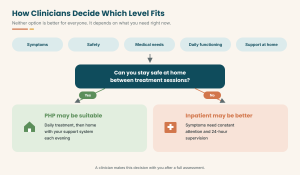
Neither option is better for everyone… the right choice depends on what you need at that time. If you can stay safe at home, PHP may be suitable. However, if your symptoms need constant attention, inpatient treatment may be a better choice.
How Does a Partial Hospitalization Program Work?
A PHP gives you a planned treatment schedule with several hours of therapy each day. Your daily routine depends on your needs and the provider, but the goal is to help you understand your feelings, manage symptoms, and build healthier habits.
At Cholla Behavioral Health, a typical treatment day lasts approximately 5 to 6 hours. Many programmes run for around 3 to 6 weeks, although the length of treatment depends on your progress and the support you need.
Your treatment usually follows these five steps, with each one helping your team understand your needs and guide your recovery:
- Clinical assessment: Your treatment team learns about your symptoms, medical history, and safety needs.
- Individualised treatment plan: Your clinicians create a plan based on your personal needs and recovery goals.
- Scheduled therapy sessions: You attend individual, group, and family therapy sessions.
- Progress monitoring: Your team checks how you are doing and makes changes to your treatment when needed.
- Transition planning: Your clinicians help you prepare for the next stage of care, such as outpatient therapy.
How Does Inpatient Care Work?
Inpatient care follows a planned process from the day you enter a treatment facility until you are ready to leave. During this time, healthcare professionals monitor your condition, provide treatment, and make changes when your needs change.
According to the Anxiety and Depression Association of America (ADAA), a typical inpatient stay lasts approximately 3 to 7 days. However, your stay may be shorter or longer depending on your symptoms, safety, and response to treatment.
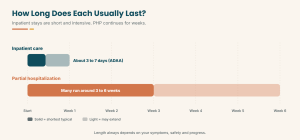
Most inpatient programmes follow these 5 steps:
- Admission and clinical evaluation: Your healthcare team asks about your symptoms, medical history, and medications. They also check your immediate safety needs. This helps them understand what is happening and decide how to support you.
- Development of a treatment plan: Psychiatrists and therapists set short-term goals based on your condition. These goals may include better sleep, improved daily habits, and symptom relief. Your team can change the plan as you begin to feel better.
- Continuous supervision and structured daily care: Nurses and other healthcare professionals monitor you throughout the day and night. Your meals, medication, rest, and activities follow a planned routine, helping you feel more settled during treatment.
- Individual and group treatment sessions: You attend one-on-one therapy and group sessions during your stay. These sessions help you understand your feelings, learn healthy ways to manage stress, and practise new skills with professional support.
- Discharge planning and aftercare recommendations: Before you leave, your team prepares a plan for continued care. This may include follow-up appointments, medication instructions, and a step-down programme such as PHP, so you know where to turn for support next.
Who May Benefit From a Partial Hospitalization Program?
PHP may be a good choice for people who need more help than weekly therapy but can safely return home after treatment. It gives you regular access to healthcare professionals without requiring you to stay at a hospital overnight.
A 2011 Cochrane review found that acute day hospital care worked as well as inpatient care for many acutely ill adults. This shows that some people can receive effective treatment through a day programme without needing an overnight hospital stay.
So, when might PHP be suitable? The following situations explain when it may help compared with inpatient care:
| Situation | Partial Hospitalization Program | Inpatient Care |
| You need structured treatment without an overnight stay | You receive treatment during the day and return home each evening. | Usually not needed unless you have serious safety concerns. |
| You are stepping down after inpatient care | You continue receiving regular support while returning to your daily routine. | Your initial inpatient treatment has already finished. |
| Weekly outpatient therapy is no longer enough | Daily treatment gives you more support between regular appointments. | May be more than you need unless your symptoms are severe. |
| You can stay safe at home between sessions | You receive daily treatment while using your support system at home. | Usually not needed when you can stay safe at home. |
When Is Inpatient Behavioral Health Treatment More Appropriate?
Inpatient treatment may be the right choice when your mental health symptoms make it hard to stay safe without constant support. In these situations, you may need more care than a PHP can provide. Your healthcare team checks your condition before recommending this level of treatment.
Some mental health problems need close attention throughout the day and night. Here are a few situations where clinicians may recommend inpatient care:
- Serious safety concerns: If you have thoughts of harming yourself or others, or cannot stay safe between appointments, you may need constant supervision. Inpatient care gives you access to trained professionals who can monitor your safety and provide immediate support.
- Severe psychiatric symptoms requiring continuous monitoring: Psychosis, mania, and serious mood changes can affect how you think, feel, and behave. When these symptoms become difficult to manage, inpatient care allows healthcare professionals to monitor your condition closely and adjust treatment when needed.
- Acute mental health crises: Sometimes, mental health problems become so serious that managing everyday life feels impossible. Inpatient treatment gives you a safe place where clinicians can focus on your immediate needs and help you become more stable.
- Medical or withdrawal-related needs requiring supervised care: Stopping certain substances can cause serious health problems. Doctors and nurses can monitor withdrawal symptoms, check your health, and provide medical support to help you through this period safely.
- Inability to manage daily functioning safely without intensive support: When eating, sleeping, personal hygiene, or taking medication becomes difficult, you may need more help. Inpatient care provides a planned routine and professional support while you work on these daily activities.
How Do PHP and Inpatient Programs Differ in Daily Treatment Activities?
The easiest way to understand the difference is to look at what happens during a normal treatment day. PHP focuses on therapy sessions during the day, after which you return home. Inpatient care includes treatment, meals, rest, and supervision in one place.
Both programmes use therapy and other activities to support your recovery. However, the schedule, amount of supervision, and way you practise new skills can be quite different. The table below shows what you can generally expect from each programme.
| Treatment Activity | Partial Hospitalization Program | Inpatient Care |
| Individual therapy | Scheduled sessions with a licensed clinician; Cholla offers approximately 2 to 3 sessions weekly. | One-on-one sessions during your stay; frequency depends on the facility and your needs. |
| Group therapy | A major part of the daily schedule, often including CBT, DBT, and ACT-informed groups focused on coping and emotional regulation. | Daily groups led by unit staff, usually focused on safety, stabilisation, and coping skills. |
| Psychiatric evaluations | Completed at the start of treatment and reviewed again as your needs change. | Completed during admission, with regular psychiatric reviews throughout your stay. |
| Medication management | Prescribers review and adjust your medication management plan while you take medication at home. | Healthcare staff give and monitor your medication at the facility. |
| Clinical check-ins | Regular progress reviews help your clinicians understand how you are responding to treatment. | Healthcare professionals monitor your condition throughout the day and night. |
| Daily treatment schedules | Approximately 5 to 6 hours each day, followed by time at home. | A structured 24-hour schedule, from waking up to bedtime. |
| Family therapy and education | Family sessions help your loved ones understand your needs and support your recovery at home. | Family contact and education follow facility rules, along with discharge planning. |
| Recovery and coping skills development | You practise new skills at home each evening and discuss your experience during the next session. | You learn and practise skills in a controlled setting before using them during aftercare. |
Can Someone Transition From Inpatient Care to a PHP?
Yes! Many people move from inpatient care to a PHP after they become more stable. This step allows you to continue receiving regular treatment without staying at a hospital overnight. You can return home each evening while slowly getting back to your normal routine.
Before this move, your inpatient team checks your symptoms, safety, and readiness for the next level of care. They also work with the PHP provider to share your treatment records, medication details, and recovery goals, so your care continues without confusion.
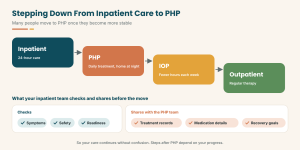
The ADAA explains that PHP is often recommended after residential care. Cholla Behavioral Health’s outpatient levels of care offer this middle ground, helping people continue treatment while spending more time at home.
How Do You Choose the Right Behavioral Health Treatment Program?
Choosing a treatment programme starts with understanding what you are going through. Think about how your symptoms affect your daily life, whether you can stay safe at home, and how much support you need. These answers can help you discuss your options with a clinician.
You should also ask about daily treatment hours, the healthcare team, family involvement, and support after completing the programme. If you need less intensive care later, ask whether the provider can help you move into an intensive outpatient program.
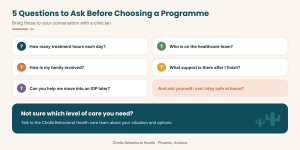
You do not have to wait until things become harder to ask for help. If weekly therapy no longer feels like enough, Cholla Behavioral Health can help you understand your options. Our care team will listen to your concerns, learn about your needs, and help you explore a treatment plan that makes sense for you.
Whether you need the daily support of a PHP or a higher level of care, the first step is simply talking to someone who understands. So, contact Cholla Behavioral Health today to discuss your situation and find out which treatment option may help you move towards a healthier, more stable life.
Frequently Asked Questions (FAQs)
Q1. Is a partial hospitalization program the same as inpatient care?
No. PHP provides daily treatment while allowing you to return home each evening. Inpatient care requires you to stay at a hospital or treatment facility, where healthcare professionals provide 24-hour supervision.
Q2. Does insurance cover a partial hospitalization program?
It depends on your insurance plan and treatment needs. Medicare may cover PHP when your care plan requires at least 20 hours of therapeutic services each week and you meet its coverage requirements.
Q3. Can a PHP replace inpatient treatment?
Sometimes, yes. PHP may work when you can stay safe at home and need regular treatment during the day. However, serious symptoms or safety concerns may require inpatient care instead. A clinician can help decide which option is suitable.
Q4. What happens after a PHP ends?
After completing PHP, you may move into an intensive outpatient program or regular outpatient therapy. Your team may also recommend medication management, follow-up appointments, and continued support based on your progress.