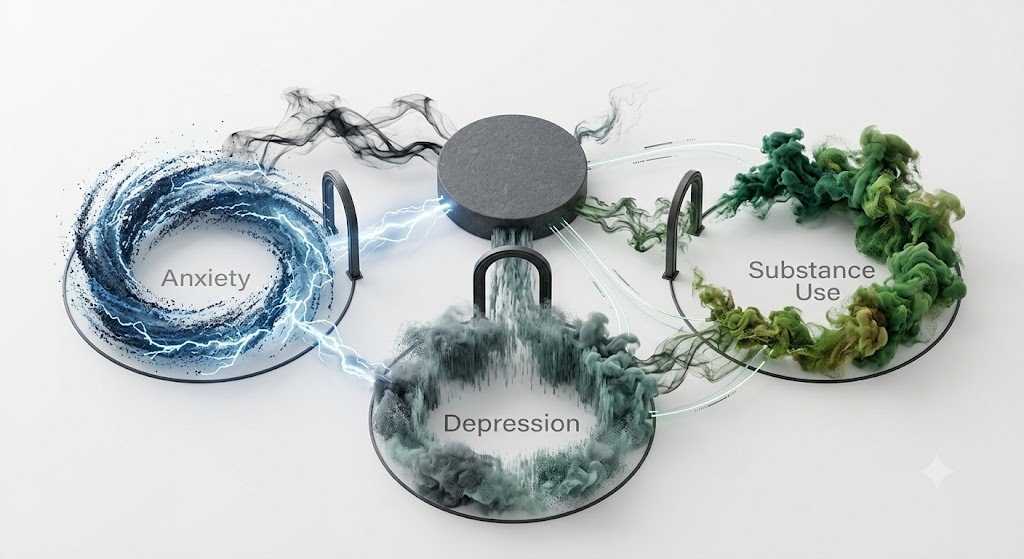
When emotions feel heavier than usual, have you ever noticed thoughts turning more often toward alcohol or other substances? This isn’t just a passing reaction. Although closely related, anxiety, depression and substance-related disorders can co-occur in ways that are difficult to notice at the time.
If you’re experiencing emotional issues, such as persistent sadness or anxiety and you’re using alcohol or drugs to cope, you might gradually begin to notice changes in your behaviour. Similarly, substance use may affect emotional balance, causing mood swings, stress and low energy to feel more intense and difficult to manage.
These patterns do not just remain restricted to feelings. They may impact lifestyle, such as concentration at work or school, social interaction, decision-making abilities and quality of life. Mental health problems that occur with substance use are known as co-occurring conditions and may require help to address both simultaneously.
Understanding Anxiety, Depression, and Substance Use
These three experiences are often discussed as separate issues, but in real life they usually overlap. It’s important to recognise each one clearly because you will be able to see how anxiety, depression, and substance use can work together and how they can impact thoughts, feelings, behaviour, relationships, and functioning together.
What Is Anxiety?
Anxiety is a continuous feeling of worry, tension or unease that may impact thoughts, feelings and physical health. It often shows up as more than occasional nervousness, becoming a regular presence that shapes how a person approaches daily situations and decisions, such as:
- Ongoing thoughts or concerns that are hard to regulate.
- Restlessness, tension, or fast heart rate in quiet times.
- Withdrawal from situations causing anxiety.
- Constant mental tension that disrupts sleep.
What Is Depression?
Depression is a mental illness with constant sadness, decreased energy and a lack of interest in previously meaningful activities. It impacts motivation, mood and engagement with life and responsibilities, such as:
- A depressed or low mood that lasts for most of the day.
- Lack of energy and tiredness that gets worse with rest.
- Trouble paying attention or making normal decisions.
- A sense of helplessness or unworthiness that continues over time.
What Is Substance Use?
Substance use is defined as the consumption of alcohol or drugs and can range from occasional use to patterns that significantly affect health and functioning. Not every use is an indication of a disorder, but patterns that disrupt functioning should be monitored more carefully when:
- Taking substances more often or more heavily.
- Difficulty cutting back despite desiring some reduction in use.
- Substance use that disrupts functioning at work, in school or in relationships.
- Continued use despite clear negative consequences in daily life.
Why Mental Health and Substance Use Often Occur Together
Some people may use alcohol or drugs when anxiety or depression are difficult to manage. These conditions also frequently co-occur in real life because shared factors such as stress, trauma, genetics and brain chemistry can make a person more vulnerable.
These patterns can have an impact on daily life, relationships and quality of life. Having mental health issues and substance use simultaneously can amplify the risk of each condition. According to SAMHSA, co-occurring conditions are common and when support is integrated, the long-term outcomes are likely to be more effective.
How Anxiety and Depression May Influence Substance Use Behaviours
Anxiety and depression can influence a person’s response to stress and pressures of everyday life. In cases where emotions may feel overwhelming, some people might turn to substances for temporary relief from the feelings; however, the difficulties are not addressed or solved in the long run.
The patterns tend to be subtle and can affect thoughts, feelings and actions over time. Anxiety can make everyday things more uncomfortable and depression can make things feel unmotivating and emotionally drained. All of them can impact routines, relationships and overall quality of life. Such influences are commonly expressed as:
- Seeking relief from persistent worry or ongoing stress that feels difficult to manage.
- Social anxiety and increased discomfort in social situations, sometimes leading to substance use as a coping response.
- Coping with feelings of sadness, emotional heaviness, or hopelessness through temporary escape.
- Withdrawal from activities and relationships that once provided structure, support, or connection.
5 Signs That Mental Health and Substance Use Concerns May Be Overlapping
The symptoms are typically not seen in one specific area of life when anxiety, depression and drug or alcohol use are experienced all at once. Rather, they may appear simultaneously in daily life, feelings, relationships and behaviours. Early recognition of these changes will make it easier to access support before more challenging management periods:
- Changes in mood and emotional stability
- Increased isolation from family and friends
- Difficulty managing responsibilities
- Changes in sleep, energy, or motivation
- Increased reliance on alcohol or drugs during stressful situations
Seek Professional Support for Your Anxiety, Depression, and Substance Use Concerns!
When mental health and substance use problems occur together, it is more prevalent than most people realise, and it’s not an issue you can solve on your own. There is professional help available for just this kind of situation, where one problem creates another and trying to solve them one at a time doesn’t seem to be working. Here’s the list of what full support entails:
- Integrated assessment: Comprehensive evaluation of mental health and substance use as interrelated rather than as distinct problems.
- Personalised care planning: An approach to treatment tailored to your experiences, history and goals.
- Flexible levels of care: Support that matches the intensity of treatment to where you are in your recovery journey right now.
At Cholla Behavioral Health, our outpatient levels of care are designed for people navigating anxiety, depression and substance use concerns together. Reach out today and take the next step toward care that actually fits what you are experiencing.
Frequently Asked Questions (FAQs)
Q1. What mental disorders have an overlap with substance use?
Anxiety disorders, depression, PTSD and bipolar disorder are among the most commonly co-occurring mental health conditions alongside substance use disorders, according to national health research.
Q2. How can mental health be connected to substance use problems?
Over time, mental health issues can lead to substance use as a coping mechanism, which can contribute to worsened mood and anxiety regulation and also overall mental health and wellness, creating a vicious cycle that worsens both conditions.
Q3. What are the top warning signs of a mental health condition?
Some of the most frequent and noticeable early indicators include frequent mood swings, isolation, struggles with everyday functioning and changes in sleep or energy.
Q4. Which mental health disorder is commonly linked with substance use disorder?
Anxiety disorders are also common, with many people consuming alcohol or drugs to cope with chronic anxiety, social unease, or physical stress.