
You’d never guess what someone is going through from the pictures they post. The photos show smiles and weekends with friends, but not the moments when life feels overwhelming.
For some people, those are the moments when they turn to drugs or alcohol to cope. But why?
A mental health condition may be part of what they’re struggling with, while substance use can make its symptoms worse. Trauma and family history can also raise the risk of developing both conditions.
When someone is dealing with both, treating only one may leave the other unaddressed. That’s why mental health and co-occurring substance use treatment focuses on both conditions together.
Here’s what this guide covers:
- What each condition means, including dual diagnosis
- How each condition can affect the other
- Which risk factors they share and how co-occurring conditions affect daily life
- Why integrated care matters and which options exist in Phoenix
What are mental health and substance use disorders?
Mental health disorders and substance use disorders are diagnosable behavioral health conditions that affect how a person thinks, feels, or behaves. Both are common in Arizona. Mental Health America’s 2026 report estimates that 24.6% of the state’s adults had a mental illness in the past year and 18.4% had a substance use disorder.
Mental health disorders
According to the American Psychiatric Association (APA), mental illnesses are “health conditions involving changes in emotion, thinking or behavior (or a combination of these).” These changes often cause distress and make work or family life harder to manage.
Substance use disorders
The APA defines a substance use disorder as a complex condition involving “uncontrolled use of a substance.” The Substance Abuse and Mental Health Services Administration (SAMHSA) estimates that 44.6 million people aged 12 or older in the U.S. had the condition in 2025.
Co-occurring disorders
When someone has both a mental health disorder and a substance use disorder, they are said to have co-occurring disorders. The combination is also called a dual diagnosis, while comorbidity is a broader term for conditions occurring together. SAMHSA estimated that 18.5 million U.S. adults had both conditions in 2025.
Having both disorders doesn’t necessarily mean one caused the other. SAMHSA describes three possible connections: someone with anxiety may rely on alcohol to cope, heavy drinking may worsen depressive symptoms, and shared risk factors may contribute to both disorders.
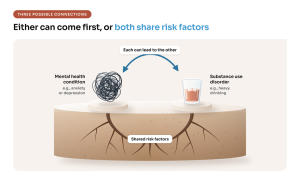
Each connection has its own section below.
How can mental health conditions contribute to substance use?
Mental health conditions can lead people to use alcohol or drugs to cope with distress, a pattern clinicians call self-medication. The National Institute of Mental Health (NIMH) notes that some conditions can also make substances feel more rewarding.
From the outside, someone drinking to cope with anxious thoughts may look like they’re simply having fun. They’re not looking for a good time. They just want their mind to quiet down.
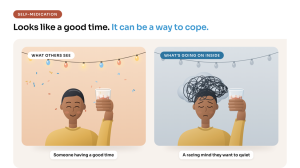
3D illustration. If someone drinks to unwind, ask how they’ve been feeling, not just how the night went.
Self-medication is one possible connection between mental health and substance use problems, though it doesn’t explain every case. SAMHSA reports that more than one in four adults with serious mental health problems also has a substance use problem. When people do turn to substances for relief, what they’re trying to manage can differ:
- Anxiety disorders: Someone may drink or misuse sedatives to calm racing thoughts.
- Depression: Alcohol or drugs may seem like the fastest way to ease a low mood.
- Post-traumatic stress disorder (PTSD): Intrusive memories may lead someone to seek relief through alcohol or drugs. NIMH also notes that substance use often co-occurs with PTSD.
- Bipolar disorder: Someone may turn to substances to cope with depressive episodes, while impulsivity during manic episodes may increase the risk of substance use.
- Chronic stress and emotional difficulties: Grief or burnout may lead someone to use substances to manage difficult emotions, even without a formal mental health diagnosis.
Cholla Behavioral Health explores the connection further in its guide to how anxiety or depression can contribute to substance misuse.
Although alcohol or drugs may change how someone feels for a short time, they don’t address the underlying distress. That’s why treatment for co-occurring mental health and substance use disorders focuses on both concerns rather than substance use alone.
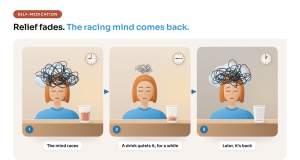
3D illustration. If drinking or drug use has become how you calm down, say so at your assessment.
How can substance use affect mental health?
Substance use can change how the brain works, sometimes triggering new mental health symptoms or worsening existing ones. NIMH also links substance-related brain changes to a higher risk of developing other mental disorders. People may notice changes in their mood, sleep, concentration, or emotional well-being:
- Increased anxiety or depressive symptoms may develop or worsen as the effects of alcohol or drugs wear off.
- Mood instability may cause irritability or anger, particularly during intoxication or withdrawal.
- Sleep disturbances can occur when substances interfere with normal sleep, leaving someone tired the next day.
- Difficulty concentrating or making decisions may occur with repeated substance use. The APA cites brain imaging studies showing changes in areas involved in judgment and decision-making.
- Increased emotional distress may follow as guilt or family conflict related to substance use adds to the stress someone is already experiencing.
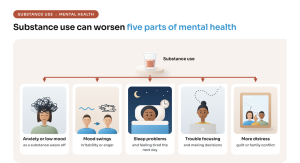
3D illustration. Noting which of these changed first, and when, helps your assessment.
Intoxication and withdrawal can both make existing mental health symptoms worse. MedlinePlus, a resource from the National Library of Medicine, notes that alcohol withdrawal symptoms in people who have been drinking heavily and regularly can begin within 8 hours of the last drink and often peak within 24 to 72 hours. Anxiety and trouble sleeping are among those symptoms.
Substance use can also affect physical health. Cholla Behavioral Health discusses these wider effects in its article on how addiction can affect mental, physical, and emotional health.
What common risk factors can contribute to both conditions?
Shared risk factors can increase the likelihood of mental health and substance use disorders without either necessarily causing the other. SAMHSA identifies genetic vulnerabilities and early exposure to stress or trauma as factors linked to both.
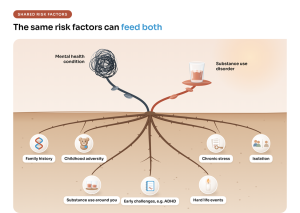
3D illustration. Bring what you know about your family history to the first assessment.
Several of these risks can affect the same person, which is why Cholla Behavioral Health considers a person’s broader history during assessment. Factors that may come up include:
- Genetic predisposition and family history can increase someone’s risk, though they don’t determine whether a disorder develops. A 2023 National Institutes of Health study involving over 1 million people identified genetic factors shared across substance use disorders.
- Childhood adversity and traumatic experiences can affect mental health and later patterns of substance use. A 2023 CDC report found that 63.9% of U.S. adults had experienced at least one adverse childhood experience.
- Chronic stress and environmental pressures, such as money problems or unstable housing, can affect mental health and make alcohol or drugs seem like a way to cope.
- Social isolation and lack of support can make emotional distress harder to manage. The U.S. Surgeon General reports that adults who often feel lonely have more than twice the odds of developing depression compared with those who rarely or never feel lonely.
- Exposure to substance use at home or among friends can make drinking or drug use seem normal, particularly when someone is already dealing with stress.
- Existing mental health challenges that start early, such as ADHD, may increase vulnerability to substance use problems later in life. Cholla also offers ADHD screening.
- Difficult life experiences in adulthood, such as divorce or a death in the family, can increase emotional distress and sometimes lead someone to use substances to cope, especially when other risks are present.
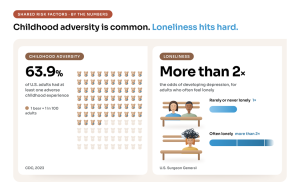
Bears rounded to whole numbers. Sources: CDC, 2023; U.S. Surgeon General.
What are the common signs of co-occurring disorders in daily life?
Co-occurring disorders can show up as changes in someone’s mood, substance use, relationships, and daily responsibilities. A person may start drinking more, withdraw from family, or fall behind at work. Everyone sees the drinking. Nobody sees the pain behind it.
The following signs may have different explanations and affect daily life in different ways:
| Common sign | Possible contributing factor | Daily-life effect |
| Persistent anxiety, sadness, or mood changes | An underlying mental health condition, substance-related effects, or both | Tension at home, difficulty focusing at work |
| Increased reliance on alcohol or drugs | Using substances to relax, sleep, or cope | Strain on health and finances |
| Difficulty controlling substance use | Cravings or withdrawal symptoms | Missed commitments, risky choices |
| Withdrawal from family and social activities | Shame, low mood, or attempts to hide substance use | Fewer supportive relationships |
| Changes in sleep and daily routines | Substance-related sleep disruption or emotional distress | Fatigue, disrupted mornings |
| Declining work, school, or personal responsibilities | Difficulty concentrating or staying motivated | Missed deadlines, falling grades, unpaid bills |
| Recurring emotional difficulties even when substance use changes | Mental health symptoms that may not be fully explained by substance use | Ongoing strain on relationships and routines |
Some of these difficulties can feed into each other. Poor sleep may worsen anxiety, making alcohol seem like an easy way to relax. Drinking can then disrupt sleep further, leaving the person more tired and making everyday responsibilities harder to manage.
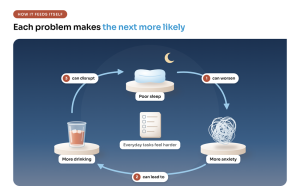
3D illustration. Because each link can restart the next, care works on both conditions at once (next section).
These signs can also have other explanations, including physical health conditions, so a professional assessment can help clarify what’s happening. Even when someone recognizes that they may need help, reaching out isn’t always easy. In SAMHSA’s 2025 survey, 82.5% of adults with a substance use disorder who believed they needed treatment but did not receive it thought they should have been able to handle their alcohol or drug use alone. Cholla Behavioral Health’s longer list of warning signs describes ten patterns that may be worth discussing with a clinician.
Why is integrated treatment important for co-occurring disorders?
Integrated treatment addresses mental health and substance use disorders together because symptoms of one condition can make the other harder to manage. Families may struggle to understand why a loved one keeps drinking despite the problems it causes. You beg them to stop drinking. They say it’s the only thing that helps. If alcohol has become their way of coping with emotional distress, treating the drinking alone may leave that distress unaddressed.
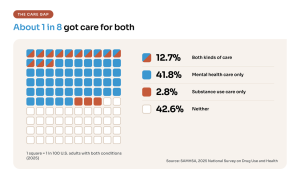
Squares rounded to whole numbers. Source: SAMHSA, 2025 National Survey on Drug Use and Health.
Sequential care addresses one condition before the other, while parallel care involves separate providers who may or may not coordinate their plans. Access to treatment for both conditions remains limited. SAMHSA’s 2025 survey found that only 12.7% of adults with both a mental illness and a substance use disorder received both types of treatment, while 42.6% received neither. Cholla’s dual diagnosis treatment approach includes:
- Coordinated care keeps mental health and substance use services aligned, with referrals to primary care and community providers when needed.
- Individualized treatment planning uses assessment findings to set goals for both conditions in one care plan.
- Ongoing clinical support adjusts the level of outpatient care as needs change and includes medication monitoring when appropriate.
What treatment options are available for co-occurring disorders in Phoenix?
Cholla Behavioral Health offers several ways to treat co-occurring disorders in Phoenix, including individual therapy, medication management, and structured outpatient programs. These options differ in what they address and how they fit into a treatment plan:
| Treatment option | What it addresses | How it works at Cholla |
| Individual therapy | Triggers, trauma, and coping skills | Two to three individual sessions weekly in the partial hospitalization program (PHP), with EMDR also offered for trauma |
| Group therapy | Shared coping skills and peer support | About 25 hours of group therapy weekly in PHP |
| Cognitive Behavioral Therapy (CBT) | Connections between thoughts, feelings, and behaviors | CBT groups, alongside dialectical behavior therapy (DBT) and acceptance and commitment therapy (ACT) |
| Psychiatric evaluation | Mental health symptoms, diagnoses, and treatment needs | Psychological assessments and psychiatric evaluations |
| Medication management when appropriate | Mental health symptoms and substance use disorders that may benefit from medication | Medication prescribing and management based on individual clinical needs |
| Substance use treatment | Withdrawal, cravings, and relapse risk | Ambulatory detox with onsite medical professionals and opioid treatment services |
| Outpatient treatment programs | Structured treatment while maintaining daily life | PHP, an intensive outpatient program (IOP) typically involving three to five days weekly, and ongoing outpatient care (OP) |
The right mix depends on the person. Symptom severity, withdrawal risk, safety, and support at home all influence the level of care someone may need. The ASAM Criteria, updated by the American Society of Addiction Medicine in 2023, use these and other factors to guide treatment placement, including for people with co-occurring mental health conditions. Cholla’s individualized assessment helps determine which of its services fit those needs.
Explore treatment for co-occurring disorders
When mental health and substance use disorders occur together, each can make the other worse. That’s why both conditions should be considered from the first assessment. Even when you know both conditions need treatment, it can be hard to know where to turn.
You see your loved one struggling. You want to help, but nothing seems to work. You don’t have to figure it all out alone. Talk to someone who understands.
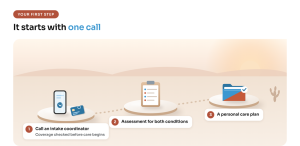
At Cholla Behavioral Health in Phoenix, you can start by speaking with an intake coordinator. You don’t need to figure out the right treatment for your loved one before you call. The call is followed by a diagnostic assessment that helps the team develop a care plan based on your loved one’s needs. For adults 18 and older, Cholla offers outpatient treatment for both conditions, as well as ambulatory detox when appropriate. The consultation request also lets you share your insurance details so the team can check coverage before care begins.
Call 602-737-1583 to speak with an intake coordinator.
Frequently Asked Questions (FAQs)
Q1. What are the most common mental health disorders associated with substance use disorders?
Anxiety and mood disorders, including depression and bipolar disorder, are among the most common mental health conditions associated with substance use disorders, according to SAMHSA. The agency also lists PTSD, ADHD, conduct disorders, and schizophrenia. Its 2023 guidance also includes personality disorders. Cholla treats most of these conditions alongside substance use, including ADHD and personality disorders.
Q2. Do I need to stop drinking or using drugs before getting mental health treatment?
You don’t necessarily need to stop drinking or using drugs before seeking mental health treatment. Cholla assesses both conditions together and checks whether stopping could put you at risk of withdrawal. If withdrawal is a concern, the team can determine whether ambulatory detox, with onsite medical staff, is appropriate. The same assessment helps the team decide what your ongoing treatment should involve.
Q3. How can I tell if my anxiety or depression is caused by alcohol or drug use?
The timing of your symptoms can offer clues about the cause, though it can’t confirm it on its own. The APA’s DSM-5-TR (2022) notes that symptoms beginning before substance use, or persisting for a substantial period after acute intoxication or withdrawal (such as about a month), can suggest an independent condition. Symptoms that ease after substance use stops may be substance-related, but that change alone doesn’t establish the cause. Cholla’s psychological assessment looks at when your symptoms began and how they’ve changed alongside your substance use.
Q4. Will my mental health improve if I stop drinking or using drugs?
Mental health often improves after someone stops drinking or using drugs, especially when substance use caused or worsened the symptoms. That improvement may not be immediate, as early withdrawal can increase anxiety and disrupt sleep. If a separate mental health condition, such as depression, is also present, stopping substance use may not be enough to treat it. At Cholla, ongoing treatment may include therapy and medication management.